Showing posts with label small changes. Show all posts

Thursday, October 23, 2014

our morning cocktail

Are your mornings too stressful?  Trying to get kids up, dressed, fed, washed, not killing each other?  Trying to get your teeth brushed, coffee drunk, make sure you have your shirt on right side out and remembered to comb your hair?  Or is that just me?

I decided mornings were getting to be too much.  We all needed a cocktail.  You know, a little relaxation.

Wait, what?  Not that kind of cocktail.  My kids aren't stressing me out to the point of early morning drinking (yet).  No, I mean a nourishing, nutrient-packed cocktail.  One that gets our bellies and our brains in the right place for the day.  

After years of pondering how to get my kids to ingest the very few supplements that I want us to take, I came up with this sort of brilliant idea.  Mix them all together with a shot of something sweet, and get them to gulp it down first thing.  Here are the building blocks:

Fermented Cod Liver Oil (FCLO).  Cod liver oil was your great-grandparents secret to great health.  It was a nearly-universal morning dose for my grandparents.  They tell me how their moms used to line them up and give each kid a spoonful.  In fact, I just read an interesting article about breakfasts around the world, and cod liver oil is still very mainstream in the Nordic countries, where sunshine (and thus vitamin D) is limited.  FCLO is rich in vitamins A and D and is a real superfood.  

Probiotic.  I don't need to say much about this, since it has become so popular in mainstream health news.  Probiotics do more than just aid digestion, though.  Our guts generate much of our immunity to diseases, so keeping them healthy and balanced helps your health overall.  I like to use one that requires refrigeration, so the little bugs stay alive. This particular brand is for infants (I got it when Baby Todd was still Baby Todd), and we are just all using it until it runs out.  

Vitamin D.  Unless we are spending a ton of time in the sun, I supplement a little straight vitamin D3 for each of us.  The kids get about 1000 IU per day (which is one drop of this liquid).  I take 3-4 drops.  Really, it's hard to go overboard on vitamin D - although it can happen, and if you get several hundreds of thousands of IU, it can be toxic.

Something sweet to mix it all in.  Once winter really rolls in and we get our first box of fresh oranges, I will juice a couple and we will get the additional benefits of vitamin C and enzymes from the fresh juice.  For right now, I'm using the syrup left from canned peaches or pears.  It is so delicious.  


I measure all the supplements into the bottom of a 4-oz canning jar.  


Add the mixer, put the lid on, and shake shake shake until everything is well-mixed.  


And that's it!  We each get a little jar and slurp it down.  Todd actually really enjoys his.  Vicki and I take it more like medicine.  Sometimes I add a little Swedish bitters into mine to help avoid the fishy burps that FCLO can give me.  

I have really been proud of myself for finally figuring out a way that we can take these superfoods that are adding to our health.  How do you get your kids to take their supplements?

[This post submitted to Real Food Wednesday and Pennywise Platter 10/23/14, and the Homestead Barn Hop 10/27/14.]

Monday, January 7, 2013

down to one

One of my very favorite things about living in New York City during college was the public transportation.  So convenient, fast, and such a great equalizer of society.  The additional mixed-use zoning and population density that went along with it were major perks.  On one block, I could go to the drugstore, visit a friend, go to work, buy groceries, get a DVD, and more.  Plus, avoiding the headaches that go along with vehicle ownership was amazing!  No gas, no parking, no traffic, no insurance, no car payments.  Of course, there was the cost of public transit, but that was nearly nothing compared to all those other categories.

I have longed for the ability to walk or ride to work ever since then, but it has never worked out.  I have lived in areas of the country that are either too rural, too suburban, or just not friendly to public transportation on any kind of realistic basis. 

Until now.

You may recall my Christmas post on my lack of holiday spirit, capped off by the news that my husband had just run his truck into a parked car.  We have liability-only insurance on both our vehicles, meaning that the insurance will pay no benefits for damages to our vehicles, only for the ones that we damage.  Money is tight, and frankly we just don't have the funds to repair the truck without taking out a loan or applying for a credit card.  I'm not willing to do either of those things, trying as hard as we are to get out of debt.  Both of our vehicles (a 2005 Civic and a 2006 Chevy Silverado) are paid for, so we don't have to worry about car payments.

When Jeff came home after the accident, we looked at each other with the same thought.  Time to try out one car.  Coincidentally, I had brought it up a few weeks ago:  why don't we just try living with one vehicle, but not selling the other?  It would be a way to trim our budget substantially.  We would certainly save on gas, and if it works, we could just drop the non-used vehicle from insurance, but save it in case we ever need it again.  Turns out we were forced into that plan a little sooner than we expected!

Nashville's public transportation is not known for its efficiency.  There are mostly buses, with one rail line coming from the far east of the city into downtown (so it does nothing for me).  It operates on an outdated hub system, meaning that if you need to get across town, you have to stop at a bus depot downtown, wait, and switch buses.  If I had wanted to get from our house in East Nashville to Vanderbilt, for instance, which is on the mid-West side of town, it would have taken me about 1.5 hours each way - ludicrous!  When I could drive in 20?!

But we have a few things working to our advantage in our current situation.  One is that my church is directly north of our home.  That means I don't have to go through the downtown hub.  In fact, one bus gets me there pretty quickly.  Second, we don't live too far back into our neighborhood that walking to the bus stop on the main road is impractical.  It takes me about fifteen minutes to walk to either of the two nearest bus stops for the route I need.  The church is directly on the main road.  So, I just have to get off the bus and I'm right there. 

I've done it for a few days now, and it seems to be working out well.  It takes me about 45 minutes, in total - all the walking and all the riding.  It takes me about 15 in total to drive.  It's nice to get a brisk little walk in on the way to the bus and on the way home.  Once I'm not pregnant, I could ride my bike much more quickly to the bus stop. The fare is $1.70 one way.  There are some discounts for buying a multiple-fare pass, but they are negated by the cost of shipping to have your ticket sent to your home (get it together, Nashville MTA!).  For $3.40 a day, 4-5 days a week, we are saving big-time over the cost of gas, insurance, repairs, and headaches in driving.  And I get to read and relax with music instead of getting angry as I get cut off.  Can't beat it!

Thursday, December 27, 2012

road tripping

We are about to embark on back-to-back roadtrips - one to Arkansas to officiate my sister-in-law's brother's wedding (wrap your mind around that one for a second), and the other to Illinois to see my sister and her family, celebrate my niece's 2nd birthday, and do Christmas with my folks.

I'm more that a little nervous about how our young screecher will do with so much time in the car.  I can't say I blame her - if I was immobilized by a five-point harness for 10 hours at a time, I'd be kind of pissed too.

One of the things this pregnancy has been showing me very starkly is that I need to make my own food.  If I eat a hint of restaurant food, or anything processed, I feel awful.  My digestion is bad, I bloat up, and I retain water.  Like, immediately.  I can't really explain the difference scientifically, but my body somehow knows the difference between the salt I use at home and the salt used in mass-manufactured food.  And it doesn't like the latter.  At all.

The holidays have been a little bit difficult, as we have a lot of family gatherings and special meals where sodium seems to have its own category on the menu.  I also love salty snacks and dishes, so it's not like I'm staying away.  But I decided that for these trips, I was going to pack as much as I possibly could and bring with us.  That way, I could at least minimize the eating out on the road and at the non-family meals.

Here it is!


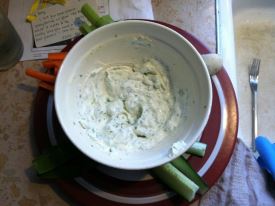
Clockwise from top, in a spiraling motion: raw milk, homemade yogurtcandied almonds, homemade crackers, homemade granola, home-baked bread, some ham and chicken salad for sandwiches on the road, homemade fruit snacks (this recipe is amazing!), cheese, fruit, carrots & celery, and yogurt dip.

In a way, I'm glad that my body has been giving me such clear signs about what I need to be eating, and what I need to be avoiding.  I truly don't even want to eat out much anymore.  I know that I will feel so much better if I just stick to my plan, and that's what I intend to do!

Tuesday, October 30, 2012

13 weeks and b-vites

Thirteen weeks came and went on Sunday.  Not much to report, except for expansion of my midsection.

Wow!  Excuse my pre-makeup, early morning "look."  Also, my husband thinks every photo looks "fine" after he takes it.  I don't think he even looked at it twice.

Everyone says things stretch a lot faster the second time around . . . seems to be true.

At my last visit with the midwife, my blood pressure was a bit higher than I'd like it to be.  130/80.  Certainly not in the "danger zone" of anything over 140/90, but just a little high.  I am not chronically hypertensive - my non-pregnant BP is usually solidly in the 120s/70s.  But after doing a bit of reading, I found that blood pressures in the 110s/60s is more "normal" for the end of the first trimester.

Starting at about week 10 of pregnancy, and continuing for the next 12 or 14 weeks, a woman's body kicks into overdrive producing more blood.  To adequately supply the placenta and the pregnant body, blood volume doubles for a singleton, and grows even larger for multiples!  It takes a lot of water and nutrients for your body to do this well.

When your body is making and circulating all this blood, it does not develop new blood vessels (other than those between your body and the placenta).  So the blood vessels you have need to relax a bit to allow all this blood through.  Thus, the normal drop in blood pressure that goes along with this expansion.

When I went to the midwife at nearly 12 weeks, I was hoping for my BP to be depressed a bit to reflect this change.  Getting back 130/80 was not very encouraging for me!  I'm certainly not freaking out, but I'd like to head off the creeping BP I experienced at the end of my pregnancy with Vicki Jo.

We talked it over at the visit, and Bobbi recommended that I add a B-vitamin supplement to my regular prenatal vitamin.  Didn't seem like it would hurt anything (B-vitamins are water-soluble and you shed any excess in your urine).  They were also pretty cheap at the health food store:  $7.99 for 50.

The one thing Bobbi mentioned was to be sure that the brand I picked had at least 50 micrograms of all 8 B vitamins, along with choline, inositol, and PABA (which are sort of like pseudo-B-vitamins, I gather).


Check!

Can I just tell you, these things are like happy pills!  I wish I knew about them long ago.  They really stabilize my mood and give me a fantastic sense of well-being.  I can notice if I forget to take them.

I think that Bobbi suggested I take them because they help boost mood and reduce stress, which will indirectly help to lower my blood pressure.  How much do I love working with a health professional who does not rush to prescribe something, but instead works on the causes behind my symptoms!?  Really love it.


Monday, October 1, 2012

herbed yogurt dip

I love that nasty French onion dip you can buy in the dairy aisle at the store.  There is almost no better junk food than corn chips or potato chips dipped in it.  Also the "veggie" variety.  I doubt there is any actual vegetable in there. 

But when I decided to try my darnedest to kick artificial ingredients out of my life, reading the ingredient list on the French onion dip gave me the willies.  Here's the list for Dean's brand: 

SKIM MILK, WHEY (MILK), PALM OIL, WATER, CONTAINS LESS THAN 2% OF ONION*, PARSLEY*, SALT, SUGAR, HYDROLYZED SOY AND CORN PROTEIN, HYDROLYZED TORULA AND BREWER’S YEAST PROTEIN, CITRIC ACID, LACTIC ACID, ACETIC ACID, MONOSODIUM GLUTAMATE, FOOD STARCH-MODIFIED, GELATIN, SODIUM HEXAMETAPHOSPHATE, LOCUST BEAN GUM, SOY LECITHIN, POTASSIUM SORBATE (TO PRESERVE FRESHNESS), GUAR GUM, CARRAGEENAN, YELLOW 5 & 6. *DEHYDRATED

Um, hold me.  I'm scared.

Luckily, I've found a phenomenal alternative!  Draining regular whole-milk yogurt for dips and for frozen yogurt has become my seond job.  It seems like I always have a pint or so sitting in a fine-mesh sieve over a bowl in the fridge, dripping whey until it reaches a stiff thickness.

Some people say you can just use Greek yogurt instead of this draining process.  In some applications, I think that's fine.  But in a dip, I think there's still too much liquid in there.  So, better to just use the regular yogurt and strain it yourself.

Herbed Yogurt Dip
2 C whole milk yogurt, strained
1 t garlic powder
1 t salt
1 T fresh parsley
1 T fresh dill


Start the night before.  Put 2 cups or so of regular whole-milk yogurt in a fine-mesh sieve lined with paper towel or cheesecloth over a bowl.  Leave it overnight in the fridge.

When you want dip, scrape the strained yogurt out into a mixing bowl.  Add the remaining ingredients.  Just use whatever herbs sound delicious.  Taste it and see if you want more garlic or salt.  You could even add dehydrated onion to get that French onion dip feel.

Use this real-food version as a dip for veggies, crackers, or even potato chips, if you must.  It will keep in the fridge for a week or so.


Thursday, September 20, 2012

"our" farmers

Wednesday is my happy day. Between 3:45 and 4:15 on Wednesday afternoon, I pick up our box at the Christian Church down the street. It is loaded and cold from being on the truck all day.

We speed home (it's usually Vicki and me) and I unpack item after item, a smile of contentment slowly spreading across my face. It may just be my favorite part of the week.

I have written a lot about how much I loved our CSA in Kansas. I really enjoyed getting to know John and Ramona, seeing their farm, and tasting their food. On a larger, ethical level, I like knowing that my money is supporting them and not Monsanto. But John and Ramona could only go so big with their family farm. They were able to supply us with vegetables, some fruit, eggs, and chicken.

My friends Julie and Jimmy have been doing a similar program through a farm and co-op called Avalon Acres. Because of increased demand from the Middle Tennessee consumers, they have taken it to the next level. They offer subscriptions for vegetables, grass-fed meat (pork, beef, chicken), eggs, cheese, raw milk (has to be called "pet milk" in Tennessee and labeled that it is unfit for human consumption!), goat milk and cheese, bread, pasta, home-jarred goods, and more. You put together what package you want per week, sign a contract stating that you will be responsible for paying for it through the end of the season, and you pick up your food weekly.

After we found we would be moving back to Nashville, Julie told me about it and I investigated a little further.  I basically had one thought:  Yes, please.

We signed up for a somewhat ambitious package. Every Wednesday, we get 1/4 share of produce (usually one fruit item and four or five servings of veggies), 1 dozen eggs, 10 oz of cow's milk cheese, and an assortment of meats.

This week:  eggs, tomato-herb cheddar cheese, cherry tomatoes, green heirloom tomatoes, french beans, summer squash, delicata squash, cucumbers, okra, potatoes, jalapenos, banana peppers, breakfast sausage links, ground chuck, pork chops, whole chicken.

The meat has been an interesting situation. In the program descriptions, we checked the box next to the meat selection that had 1 chicken portion, 1 pork portion, 1 beef portion, and 1 breakfast meat portion per week. The portions were described as "enough to feed two adults." I thought it would be just right, since Vicki still doesn't eat a whole serving of anything at meals.

What has been arriving has been WAY more than that. I'm having trouble complaining about it, because the meat is amazing! Tender, flavorful, well-marbled steaks, plump chickens, delicious chuck for burgers, bacon to die for, etc. But we have easily been getting enough to feed four in each of those portions. For instance, today we got: 1 whole chicken, 1 lb pork chops, 2 lbs ground beef chuck, and 1 lb of breakfast sausage links. Tell me what family of two adults can get through that much meat in a week!? My freezer is bulging already. I think what I will do is just continue with this through the end of the season (late October) and then do a veggies, eggs, and cheese only package after that for awhile to work through my backlog of meat.

I have tried their raw milk, and was impressed with the quality.  However, the cost was high.  $3.75 per quart.  Since my Avalon Acres subscription started, I've found a separate co-op for raw dairy that is much more reasonable ($3.50/gallon). 

So, for all this locally-grown, absolutely delectable, high-quality meat, dairy, eggs, and produce, we must be paying an arm and a leg, right? You may be surprised.

We pay $72.75/week for all this food. What we buy outside this is negligible (coffee, milk, tea, a bit of fruit, bread, pantry items). I would say that, in all, we pay about $100/week for groceries. It's certainly more than if I just went to Kroger and got the store brand of everything and the cheapest meat available. But it is so much better in every way. I literally feel better after eating a meal from the farm. I digest everything well. I feel light and energetic.

Call me crazy, too, but I really trust these people. The Avalon Acres farm works together with three Amish communities in a sort of co-op to get their food to the consumers and our money to them. I tend to feel that the Amish, as a whole, are one of the only groups left in America whose product billing and promises are real. I trust their word if they say the cows are fed grass and hay. And my husband will tell you that I don't trust people easily. A bit of a cynic over here, especially about marketing and branding.

If you are in Nashville and are interested in this kind of program, you must try it out. Perhaps don't dive in headfirst like we did! But give your money to this community and your heart and your body will thank you.

P.S. My old junior-high colleague Erin did a great piece on her blog about how the "locavore" movement is really kind of silly, or at least doesn't have all the environmental benefits that its adherents claim. I think that's probably true. The old truck that delivers my box every week is certainly not very fuel-efficient. But from a health standpoint, I can say that this kind of eating does seem to be better for me. Also from a "help your neighbors"/invest in local business kind of standpoint.

Wednesday, August 29, 2012

taco seasoning

I have reached a new and happy place in my life.  One in which I no longer deeply desire to go out to eat all the time.  Jeff and I are food lovers.  We enjoy trying new places, going to favorite restaurants, and comparing dishes and dining experiences.  We have been known (in richer days) to spend obscene amounts of money each month on dining out - in the postpartum haze of a baby who simply would not be put down, sometimes near 900 or 1000 dollars.  I know.  Unreal.

I love cooking too.  Love it, love it, love it.  And look forward to it.  But my evenings are not always my own, and there are weeks like this one, where Sunday evening is Madison Community Meal, Monday is Lay Leadership Committee, Tuesday is Colin's Angels Orientation, Wednesday is church supper and children's program, Thursday is Titans game for Jeff's birthday.  Friday we are having our friends Neil and Kate over for steak sandwiches, about which I am unreasonably excited.  But nevermind.  Back to tonight.

Given all of that, it's no small thing that tonight, as I sped down Ellington Parkway (eyeing the scariest public awareness campaign of all time:  electronic billboards over the road that say "Tennessee Roadway Fatalities This Year:  681.  Don't be next" with the number ticking up every day), I thought long and hard about stopping at Calypso Cafe to get a quarter dark chicken, callaloo, black beans, and corn muffins.  I salivated a little.  And then I thought of my leftover roast chickens at home.  Two delectable birds we cooked over at Memaw's for Sunday dinner.  They were waiting to be picked cleaned and repurposed.  I decided that was actually what I wanted and drove right by Calypso.

So I took my birds out of the fridge, picked off the remaining meat, and put it in a skillet with a little bacon fat, a few cubes of frozen chicken stock, and a tablespoon or so of taco seasoning.  Have you ever looked at the ingredients on those packets of taco or fajita seasoning you get in the Mexican food aisle?  There is some fairly recognizable stuff, and then also some maltodextrosodiumglutamathione.  Or whatever.  Not good.  So I figured, How hard could it be to make my own?  And I did.  It's easy and you know just what's in it - all spices you can feel okay about.


Taco Seasoning
4 T chili powder
10 t paprika
3 T cumin
5 t onion powder
1 t garlic powder
1/4 t cayenne pepper

Mix all ingredients and store in an airtight container for up to a year.
*One important thing to note about this recipe is that it does not contain salt.  So, you will still need to salt your taco meat to taste.

Tonight, I took my chicken taco filling and fixed it up my favorite way.  I spread sour cream on two small flour tortillas (if you are really being good about whole grains, go with corn tortillas warmed in a dry skillet), added the chicken, sprinkled shredded cheese on top, and finished with chopped lettuce and tomato.


It was worth the wait.

Monday, August 13, 2012

ginger bug

My last fermented beverage success story gave me a lot of courage.  I have been continuously brewing kombucha from that SCOBY since I posted my method.  (Edit:  I had been, until just before we moved to Nashville, and I let my mother go dormant.  Fruit flies got into it, and I had to throw it out!  But I made another one in no time with the same method as before, and it is back to churning out the booch!)  It is delicious, helps my digestion, gives me energy, is fizzy and refreshing, and just generally makes me feel good.  Good knowing I made it, I know what's in it, and it's not toxic crap like I used to consume daily (i.e. Diet Coke). 

So I decided to give it another go.  I finally got my hands on a copy of Nourishing Traditions and saw a whole section on ginger bugs and homemade sodas.  It turns out that the reason sodas were originally served in pharmacies was because they were actually considered to be medicinal!  Before the advent of artificial carbonation, carbon dioxide could only be created in beverages through yeast eating sugar (this is still the case for all beer - the yeast eating the sugar also produces the alcohol, in that case).  The yeast produces all kinds of positive stuff as a by-product of eating the sugar.  B vitamins, probiotics, C vitamins (depending on what you put in as flavoring).  Healthy things.  No wonder these sodas were considered medicine!  I guess they could more accurately be called "health tonics."  And the sugar - the negative part - gets eaten up!  It's like magic.  I love watching these things come alive in my kitchen. 

Making a ginger bug was ridiculously easy.  Buy a big piece of ginger root and some white sugar.  If you don't have a water filter, buy some filtered water.  Put a cup of filtered water in a quart-size mason jar.  Dice or grate 2 tablespoons of ginger (you could peel it if you want, but why?  Plus I've heard that the spores on the skin culture the bug faster) and dump in the water.  Add 2 tablespoons of sugar.  Stir, cover with a cheesecloth or tea towel, and secure with a rubber band.  Put it somewhere warm and dark and leave it alone.  Every day for the next week, feed it with another 2 tablespoons of ginger and 2 tablespoons of sugar and stir.  By the end of the week, it should be bubbling vigorously, smell potently of ginger (if it smells foul, something went wrong - pour it out and start over), and have a film of white on the bottom of the jar (spent yeast cells). 


Now you have your soda starter ready to go!  The idea is very similar to a sourdough starter.  You have a culture that you keep at the ready, and then you use a bit of that culture to brew each batch of soda, just like you use a bit of sourdough starter to leaven each loaf of bread.


You can flavor it however you like.  The rule is 1/4 C sugar to 1 quart filtered water.  This time around, I put the water and sugar in a saucepan and added a chopped lime and 1/2 C blueberries.  I let it boil for a little bit, then cool to room temperature.  Then I strained it into a quart-size mason jar, added 1/2 C strained ginger bug, and capped it tightly.  

(Didn't get a picture.  Phooey.)


In a day or two, I started to see bubbles forming and the color of the soda (it had been dark purple) lightened.  I "burped" the jar each day to release excess carbon dioxide and let it ferment about three days.  I tasted it to be sure, and it was delicious.  Dry, crisp, bubbly, gingery, citrusy.  I put the jar in the fridge and we've been enjoying a soda we can feel really good about.  I let the baby drink out of my glass with absolutely no guilt!

(Do take care when you open the jars, as they might fizz over just like a bottle of soda pop.)

Tuesday, May 1, 2012

witchy woman

[This post submitted to "Your Green Resource" at SortaCrunchy.]

My mom's dad was a pharmacist.  He owned the McNitt Drug Store in Ulysses, Kansas.  My mom and uncle worked the soda fountain when they were teenagers.  Eventually, they sold the store and we were left with boxes upon boxes of fountain glasses, glass-front pharmacy displays, and the dish sets my grandparents got as part of subcriptions for selling certain drugs (an early iteration of drug-rep perks, I guess!). 

In our medicine cabinet, two reminders of Granddad as a pharmacist were bottles of gentian violet and witch hazel.  I never remember using the violet (except when I dropped it on the newly-redone bathroom floor and saw my mom hang her head and cry for the first time).  But I do remember the witch hazel.  We used it all the time, especially for cleaning out our ears. 

Witch hazel is a shrub that has natural astringent properties, helping to contract blood vessels under the skin it comes in contact with.  I had previously been using Neutrogena Alcohol-Free Toner to clean my face at night before bed.  (In the morning I use the oil cleanse method.)  Take a look at the ingredients in this bad boy: 


I don't know what PEG-4 is, but it sounds scary.  Time to make a switch.  I remembered the witch hazel from the medicine cabinet of my youth, thought fondly of Grandpa Bill, and picked up a bottle at Target for about $1.95.  The makeup of this is much more benign:


It does contain alcohol, which some people find to be drying to their skin.  I have found harsh cleansers to be the problem in my case, and once I switched to oil cleansing, I haven't had a problem with dryness or flakiness at all.

So far, the results are great!  Skin feels smooth, clean and fresh in the morning.  It's much, much cheaper than the Neutrogena product I was using before.  And I can rest assured that it has no strange chemical ingredients or artificial fragrances.  That's how I went from this:


To this:


Wednesday, April 18, 2012

crackers without the crap

I love a good cracker.  Really, in general, crunchy is my favorite food texture.  It's gotta be crunchy peanut butter or I'm not interested.  Crisp, fresh vegetables and fruits.  Chips are my weakness.  Wheat-thins or Triscuits have been staples of our pantry for a long time, but I started to get sick of buying them for a couple of reasons.  For one, it was impossible to find a cracker that had a simple, short ingredient list.  (Actually, original Triscuits are pretty simple:  whole wheat, soybean oil, salt.  But I hate soy and am trying as hard as I can to eliminate it from my diet.)  Two, crackers are expensive!  Even for the off-brand "wheat thins," I was paying three or four dollars for a box that didn't even last a week. 

And yet, making crackers seemed like an impossible feat.  How would I get them thin enough?  How could they be extra crispy?  I don't have an industrial kitchen! 

Turns out it's super simple.  An added bonus is that I can soak the flour overnight in yogurt, which produces a more tender cracker and also helps make the grain more disgestible (and therefore, the nutrients more easily taken up by my body).  Soaking grains and legumes is one of the small steps I've started taking toward cooking more traditional and wholesome foods.  In general, I love making things for myself and my family because I have total control over the quality and source of the ingredients.  This recipe is very adaptable:  you can use whatever kind of flour you please (whole wheat, spelt, plain all-purpose, etc - extra credit for being super fancy and grinding it yourself) and whatever herbs you think might go well together - or none at all if you're a purist.

We've been gobbling these up.  The baby especially loves to teethe on them.


Homemade Crackers

1 1/2 C flour (pretty much any variety)
1/2 C whole-milk yogurt (not Greek - you need all the whey from the regular kind)
1/4 C butter, plus more for brushing
2 t garlic powder
1 t fresh minced dill
salt and pepper

Stir together flour and 1 t salt in mixing bowl of your stand mixer (or just in a large mixing bowl).  Add the yogurt and knead with the dough hook (or your hands) until a ball of dough forms.  Cover the bowl with a tea towel and let the dough rest at room temperature for 8 - 24 hours. 

Preheat oven to 450 when you're ready to bake.

Remove the towel and add 1/4 C butter, garlic powder and dill.  Use the mixer attachment and beat it all together until it's well incorporated.  If the dough seems too wet, add a little more flour until it comes together into a pretty firm ball.  Divide the dough into two balls.  Turn one ball out onto a floured pizza stone and roll it out very thin (~1/8 inch).  Brush the dough with melted butter and use a fork to dock it (poke little holes in it) about thirty or forty times all over.  Use a pizza cutter or a sharp knife to cut into whatever shapes you desire.  Bake for eight minutes or until they are lightly brown and crisp.

Once those crackers have cooled a bit, repeat the process with the other ball of dough. 

Yields about eighty crackers, depending on how small you cut them. 

Saturday, April 7, 2012

the booch

Up until a few months ago, I had never tried this mysterious concoction called kombucha.  When I heard it tasted a bit like fizzy vinegar, I knew I would like it.  I love vinegar.  Sometimes I even just drink a little vinegar by itself (is that weird?  Oh well). 

The health benefits of this ancient beverage are often cited as reason to begin consuming it.  People get a little fanatical (can it really cure cancer?), and most of it is not verifiable by any large empirical research studies.  I'm all for a good liver detoxification, but the real reason I started brewing my own 'boocha was because I wanted to quit drinking diet soda.  I'd had a mild diet-Coke-a-day addiction for many years, and I was ready to kick artificial sweeteners out of my life. 

I went to the Merc while I was in Lawrence for playgroup one Thursday and picked up a few bottles.  I got unflavored raw kombucha made in Lawrence and I got a ginger-flavored one from GT's, which is a very popular purveyor of these beverages.  They each cost me about five bucks, making it nearly ten times as expensive as my cans of diet soda.  After a taste test in which I confirmed that I did indeed love the flavor, I quickly decided I needed to start brewing my own because of the exorbitant cost of store-bought kombucha. 

After downing a bottle that Thursday afternoon, I made an important discovery:  large doses of kombucha make me crazy!  Far more so than caffeine.  And they made my breastfed baby even crazier.  We were both up until midnight with insane amounts of energy.  All I can figure out is that those B-vitamins are mad powerful.  Lesson learned:  I restrict myself to less than 8 oz, and drink it at lunchtime or before. 

I did a little research and found out I had some options.  I could locate a SCOBY (symbiotic colony of bacteria and yeast - the thing that does the good stuff in the kombucha) from someone locally, order one from an online company, or take some time and grow my own.  I went the grow my own route.  It's easy, but it took about a month.  Here's how I did it.

Take a bottle of raw, unflavored storebought kombucha and pour it into a quart-size mason jar (glass is really the best medium for doing all things kombucha.  It's so acidic that it can leach from metal or plastic).  Brew up a cup of black tea using filtered water (chlorine in tap water can kill the microorganisms that you want) and add one tablespoon of sugar while it's hot.  Once it cools to room temperature, add it to the mason jar.  Cover with a tea towel or cheesecloth and secure the top with a rubber band.  Put it in a dark cabinet or corner and leave it alone.  Over time, you will notice a thin layer start to build up at the top.  That's good!  When the layer gets to about a third of an inch thick, you have a SCOBY ready to go.


I can hear your thoughts:  but Emily, aren't you worried about botulism?  Aren't you worried about making yourself sick doing this stuff in your own kitchen?  Are you crazy?  No, no, and yes.  The only thing you really need to watch for is mold on your SCOBY.  I've never had this happen, but I've seen pictures and it literally just looks like the mold on old bread.  You can't miss it.  If that happens, throw everything out and start over.  And have a little faith in the history of humankind:  people have been brewing beverages at home for tens of thousands of years.  I don't know figures on death from this, but surely it's in the freak accident range.

Okay, so you have your SCOBY ready to go.  Here's how you make your first batch.  I make just a quart at a time, since I'm the only one drinking it.  You can really make as much as you want, it will just take longer.  Or, you can grow more than one SCOBY at a time and have multiple jars going. 

Bring a quart of filtered water to a boil.  Add four tea bags and a quarter-cup of white sugar.  Stir to dissolve and let it come to room temperature.


Remove the tea bags.  Funnel it into a quart-size mason jar, leaving some room at the top (you may have a little extra sweetened tea - enjoy a cup!).  Transfer over your SCOBY from the other jar (chopsticks are helpful.  If you use your hands, make sure they are very clean).  Pour in enough of the liquid leftover from growing your SCOBY to fill the jar.  Cover loosely with a tea towel or cheesecloth and secure with a rubber band.  Put it in a dark cabinet or corner.  In the winter, it takes me about ten days to get a good fermentation.  In the summer, more like five.  How can I tell when it's done?  I take a clean spoon and get a little of the brew from beneath the SCOBY and taste it.  If it's mostly sour and fizzy, I know it's done.

After the initial fermentation, you have some choices.  First, remove the SCOBY and transfer it to another batch of sweetened black tea (thus starting the whole process over).  Also, remove about 25% of your finished kombucha and use it in the next batch.  This insures consistency in the brew.  Then, you can just cap your finished kombucha and refrigerate.  Or, you can add some fruit juice or ginger for flavor and cap it, then put it back into your dark corner for a secondary fermentation.  Leave it for two days, then refrigerate and enjoy.


I've heard that you can let your SCOBY go dormant after you're done with it, and then bring it back to life like a sourdough starter.  I've never done this, so I won't tell you how.  Over time, your SCOBY will have babies!  They are so cute!  Just kidding - in general a SCOBY is really scary looking and I use it to threaten my husband.  Jeff!  Take out the garbage or I'll put the SCOBY on you while you're sleeping!  You can just leave it all together, or you can separate off the babies and share them with people who need SCOBYs.  Or just take them off and throw them away.


When you open your finished and refrigerated kombucha, watch out.  There can be a good deal of pressure built up behind the seal. 

It is a beautiful, light, fizzy contribution to my beverages.  I haven't bought a single soda since I started brewing my own.  The cost is negligible:  the initial investment in a bottle of store-bought kombucha, some sugar, water, and black tea bags.  And jars.  And it has opened the door to a world of other home-fermenting projects.  What's next?  Ginger bugSourdoughKefir?  I will keep you posted!

Thursday, February 16, 2012

in which i quit deodorant

By any account, I am a world-class sweater.  And no, I don't mean I'm made of softest alpaca.  I have always sweated a lot.  Like can't-wear-gray-in-summer sweating.  Like hardly-even-need-the-winter-coat sweating.  I'm usually the warmest person in any given room.  I've been addicted to my Sure invisible solid unscented stick since I was about twelve years old.  I thought that I would just have to buy all new white shirts every year.

My mom died of breast cancer, so I know that I have an increased risk for developing cancer myself.  I know the jury is still out on the effect of aluminum in antiperspirant, but I started to think why chance it?  If I could come up with something that could keep me marginally dry and non-stinky, I would consider using it.  After my last stick of Sure ran out, I tried just using nothing for a week or so.  Bad idea!  I could smell myself by midday, and this was during the winter!  I started looking up recipes for making your own deodorant.  It seemed like the common denominators were coconut oil, baking soda, and cornstarch.  Easy enough.

Here's how I did it:

Melt 6 T coconut oil in a small saucepan over low heat.


Once it's melted, add 4 T baking soda

And 4 T cornstarch.


Mix it up well.

At this point, I was sort of unsure what to do with it.  I decided just to dump it in a little cup and put it in the fridge until it set.  After it cooled, I dipped the cup in hot water and popped the cake of deodorant out.  I've been keeping it in the fridge wrapped in a washcloth.  I opted against keeping it in the bathroom because coconut oil melts at 76 degrees, and when we shower the bathroom regularly exceeds that temperature.  I just grab it while I'm making breakfast in the morning, hold the bar of deodorant in the washcloth against my skin for a moment to soften it, and then rub it around like regular antiperspirant.

The verdict?  Love it!  Ask me again in the heat of summer, because I might change my tune then.  But for now, it works great!  Keeps me smelling fresh, and even has reduced the amount of overall sweating.  Best part:  no white marks on dark clothes, and no yellow stains on white clothes!

And that, my friends, is how I went from this:

To this:


**Update 4/6/12**  After nearly four months of using this homemade deodorant, I started to get a small red rash in the center of each armpit.  Not sure if it was one of the ingredients, or just the physical scratching of the baking soda and cornstarch.  It got a little uncomfortable, plus it started getting really hot, so I caved and bought some Tom's of Maine deodorant.  I think the homemade will be my go-to during the cooler months.

Friday, November 18, 2011

counterintuitive cleansing

I have been making a concerted effort of late to rid our home environment and diet of things that aren't natural and wholesome.  I've done the easy stuff for a long time:  cleaning with vinegar and baking soda, drinking filtered water, eating as many whole and unprocessed foods as I can.  It was time to step up my game.

Toiletries and self-care products contain a litany of strange unpronounceable chemicals, and they are subject to even less regulation than edibles!  For example, I recently read a whole article about how Johnson & Johnson baby shampoo contains known carcinogens.  Ugh.  I'm not naive enough to think that I can prevent myself or my family ever getting sick or eventually dying (won't we all?).  But I do want to make the quality of life we enjoy between now and then as high as possible.

I have often wondered about how people in ancient times or even pioneer days cared for their bodies.  In my Latin classes, I learned all about the baths and how olive oil was used to clean the skin.  I never really stopped to think it through too much.  But olive oil?  Cleaning?  How?  My only experience with it had been to grease up pans for cooking.

On a couple of different blogs, I found out about the "oil-cleanse method."  Apparently the idea is that oil attracts excess oil to itself.  Also, many of us were brainwashed by Noxzema commercials when we were teenagers to think that the cure for breakouts is to remove all traces of oil from your skin.  But your skin needs oil!  Sometimes skin becomes more oily as an overcompensation for having all the moisture stripped from it by harsh cleansers. 

So I decided to give it a try . . . and it's been amazing!  It's cheap, natural, and does an awesome job of cleaning my skin while still leaving the proper amount of moisture.  I've been toying with the proportions a little, because my skin tends to be on the dry side (especially as we go into the dry-heat-conditioned rooms of winter).  But start with a one-to-one ratio, and see what happens!

Start with olive oil (cold-pressed is good) and castor oil (I found this at Walgreen's in the "digestive health" section.)  Make a sample batch to see how it works for you:  I just put 1 T of each into a spare little plastic travel bottle and mixed it together.  On the proportions:  the olive oil is the moisturizing element and the castor oil is the purifying one.  So if you tend to be more on the oily side, try 2 T castor oil to 1 T olive oil.  Likewise, if you're dry like me, try 2:1 olive oil to castor oil.  It may take a little trial and error to find your perfect formula.

Massage a quarter-sized amount into your dry face.  Take a washcloth and run it under very hot water.  Drape the hot washcloth over your face and slowly count to ten.  Rinse the washcloth and run it back over your face to remove any excess oil.

You may or may not still need a little face lotion after this.  I actually haven't needed any at all, and I've been doing this every morning for the last two weeks or so. 

This success gave me the courage to think about trying to make more of our own natural toiletries and cleaning supplies.  Next up . . . homemade laundry detergent!

Monday, September 19, 2011

the whole chicken!

[This post featured at Sortacrunchy's "Your Green Resource"]

Like most of meat-eating America, I used to gravitate toward the boneless, skinless chicken breasts at the store.  They were neat, lean, easy to cook . . . and they cost more than any other cut.  Additionally, because I'm a freak and always wanted to make sure they were totally cooked before eating, I would cook them until they were tough and dry.  I would cut into them repeatedly during the cooking process (to see if they were still pink) and release all the juice from inside the meat.

My husband has always favored dark meat.  It's juicier, usually more tender, and it's more forgiving when you cook it.

And a whole chicken?  I thought that cooking a whole chicken was insane.  Don't you have to wash it first, and spread icky chicken germs all over your ever-loving kitchen?  Doesn't it take eighteen hours to cook?  Isn't it a huge amount of meat?

A few Christmases ago, though, I asked my family to gift me with cookbooks.  My brother and his wife gave me one called The 150 Best American Recipes.


I have never really had a dud of out of this cookbook.  Some of the recipes are fussy, requiring specialty ingredients or tricky techniques.  But some are so blissfully simple. 

One of the recipes I tried was for a salad with chicken from the famous San Francisco restaurant Zuni Cafe.  It was one of the afore-mentioned fussy recipes.  There was a bread salad, and greens, and you had to roast a chicken and then wait for it to cool to shred and put over the bread salad.  I skipped the salad part and decided to just make the chicken.  It was magic.  Here were the main pointers that converted me into a whole-bird person:

* Buy a small chicken!  Most of the ones you will see at the store are like five or six pounds.  Dig around and find the smallest one.  Don't go above three or three and a half pounds.

* Let the chicken dry in the fridge first for the crispest skin.  This sounds bizarre and illness-inducing, and it's not for the squeamish.  But if you salt a chicken and then leave it uncovered in the back of your fridge for like a day, the skin will tighten and dry out and when you roast it it will be so deliciously crackly.

* Roast it at the highest heat you can muster without totally smoking out your kitchen.  They recommend 450, I think, but we don't have a hood vent.  So I usually go around 400 or 425.  This cuts the cooking time down a lot. 

* Use a thermometer to check the internal temperature of the chicken!  Don't just cut into it over and over.  You're looking for 165 when you stick it in between the thigh and body.

So here's the "recipe," which is really just a way to do it.

1 2-3 lb chicken
Sage leaves (optional)
4 garlic cloves
salt and pepper

A day or two before you're going to cook the chicken, uncover it, work the skin up around the breast and thighs, and stick a whole peeled garlic clove and a sage leaf or two between the skin and meat on each side of the breast and each thigh.  Season thoroughly with plenty of salt and pepper, both inside and outside the bird.  Allow it to sit, uncovered, in the fridge until you're ready to cook.

Preheat the oven to 425.  Take a cast-iron skillet and let it get very hot on the stove.  Drop the chicken in breast-side down, and let it cook for two minutes.  Then flip the bird using tongs and transfer to the hot oven.  After ten minutes, flip it over again.  After ten more minutes, flip it again so the breast is up.  Leave it for five to ten more minutes, then check the temperature.  Let it cook, breast side up, until the internal temp is 165.  Pull it from the oven and let it rest ten minutes, then carve and enjoy.

This recipe will really only serve two or three people.  So, if you have more than that, roast another chicken at the same time.

I love this recipe.  I make it probably every other week.  I save the carcasses after we're finished and use them to make chicken stock:

chicken carcasses
three carrots, unpeeled
three stalks celery (you can skip this - I personally hate buying celery because I never use it all before it gets all limp and weird)
one whole onion
three garlic cloves
salt
peppercorns

Cut the carrots and celery into two inch chunks.  Cut the onion into quarters.  Put all ingredients into a large pot or Dutch oven and fill with enough water to cover everything.  Bring to a rolling boil, then cover and reduce to a simmer.  The longer you simmer, the better.  Don't tell the fire department - I often leave it on low and let it sit overnight.  Once you're satisfied with the taste and seasonings, let it cool completely.  Strain out all the solids and discard.  Put it back in the pot and let it sit in the fridge for several hours.  Most of the fat will rise to the surface.  Skim it off with a spoon and discard.  Then you can use it, or I freeze it in ice cube trays and then pop out the cubes and keep them in a plastic bag in the freezer.  Each cube is usually about two tablespoons. 

There you have it - a two-for-one on Munchee Monday.  Really, though - if you have never considered becoming a whole chicken person, try it sometime.  It's not really that hard, and you make a statement to the poulty industry that you're not interested in breeding and genetically modifying chickens so they have Dolly Parton breasts.