Showing posts with label birth. Show all posts

Tuesday, November 11, 2014

my children aren't "exclusive"

Parenting these days isn't for the faint of heart.  At least for those who have the internet at their disposal from the first moment they see two lines on the stick, through the late nights up with the newborn, to the late nights up with the toddler, to the late nights up waiting on the teenager . . . wait, do I sense a theme?  :)

The kids on a pallet watching TV - oh wait, that was something else they weren't supposed to do, right?
Seriously, though - it is just way too easy to ask Google:  "Am I a bad parent?"  "How do I get the baby to sleep?"  "I yelled at my toddler is she ruined forever?"

Parents who didn't have the advantage of Google and 3780340 parenting books seemed to have a lot more peace of mind.  Perhaps they didn't know they were making such monstrous mistakes as not feeding their kids all organic home-pureed baby food.

Kids these days have to be "exclusively" everything, if they want a chance at success.  It starts with birth.  Exclusive medication-free, of course.  Wait, I failed that one.  I had a half-dose of some dope that gave me amazing hallucinations during Vicki's birth.  Then, with Todd, well - no chance for any medication although I would have traded my left brain for some at one point.  Nope, my kids weren't exclusively free of medications at birth.

After birth comes vaccinations.  We have neither followed a standard vaccination schedule, nor refused to vaccinate.  Wait - you mean there's another option than being exclusively pro or anti vaccine!?

Let's not forget cloth diapers.  Well, except for all those times I've used disposable diapers.  Then we can forget them.  But hey, every time I use a cloth diaper, it's one less disposable in the landfill, right?

Next - exclusively breast-fed, naturally.  Except that didn't quite work out for me either.  I nursed them both as much as I could (and still nurse Todd), and recognized that they wouldn't die from being fed formula the rest of the time.  No exclusivity for my combo-fed babies.

Then the sleep training debacle.  Of course, you're either spoiling your kids and defiling your marriage by letting your kids sleep in your bed, or you're abusing your kids by letting them cry in their cribs at night while you pee by yourself for once in your life.  No middle ground here either.  Exclusively attachment parenting or cry-it-out.  Well, I failed on that one too.  My babies sleep with me all the time, except for when Vicki started sleeping by herself when she was six months and she cried a bunch.  Then she slept through the night.  Looks like I failed to be consistent on this point, as well.

When your kids start eating real food, you are bombarded by more alarmist messages:  If you feed them before six months they will be obese!  If you feed them non-organic food they will get autism!  The doctor is telling you to give them gruel with no nutritive value that looks awful.  Once again - I was never able to achieve anything exclusive.  I was the weirdo who pureed coconut oil and chicken stock and homemade yogurt into squash and took it to my kids' daycare.  But I also let them eat my fries soaked in GMO canola oil.  Nope - life is too short to ever leave a French fry behind.

And now that we are through all those hurdles, the lack of exclusivity continues.  Sometimes I yell at my kids.  Mostly I try to hug them.  Very occasionally they get spanked.  I guess this disqualified me from the ranks of the attachment parenting people.  But I also don't discipline them with rods and crazy Biblical teachings, either, so I guess I can't be a part of the Train Up a Child community.

There will be more crossroads in the future.  Someday my kids will choose gender identities and sexual orientations.  I have no idea if they will be exclusively gay or straight.  And that's totally cool with me.  Someday, perhaps, they will choose partners - and I'm sure I will neither love nor hate those people, but have extremely nuanced feelings about them.

See, life isn't about exclusivity.  I hope the one message they are seeing from me, through all of this, is that life is messy and complicated.  People who have doctrinaire stances on these issues are setting themselves and their kids up for hard re-actions.  There isn't much I can be sure of.

But there is one thing.  My children are exclusively loved and protected by God.  They are exclusively inhabited by the Holy Spirit, and held by a community of faith.  God's love for them is perfect and God needs no Google or manual to show how to love children.  So I'm leaving it up to him.  Because obviously I can't get it right!  And I've really quit trying to be so perfect.

Thursday, July 11, 2013

placenta for breakfast . . .

In natural/hippie mom circles, eating your placenta is the panacea for nearly everything:  postpartum depression, low milk supply, losing pregnancy weight, and basically anything else you can imagine.  Nearly every mammal does it, we reason (other mammals also eat their children who seem too weak to make it . . . so I'm not sure they're the best example!).  In my research, I only ever found one example of someone who regrets eating it.  It is interesting that it is like a supplement made especially and only for you by your own body.  Eating it is supposed to help you ease off the pregnancy hormones slowly, rather than dumping you in a pit of tears and night sweats while you're still weak from giving birth.

The placenta is a fascinating little bit of human anatomy.  It is the only organ that we are designed to grow and then lose.  It provides all the essential nourishment to the baby while they are in the womb.  It also generates the pregnancy hormones that sustain the little life growing within.  The "guided tour" of my placenta was one my favorite parts of Vicki Jo's birth.  My midwife Rebecca showed me where the blood vessels entered, how they branched, where any calcifications were (a sign of an old, worn-out placenta), and told me mine was good and healthy.

With Todd, my placenta was huge!  It was over a pound, and very long.  I had suspected it was large because it was so hard to get a good heartbeat on him throughout pregnancy.  Turns out my placenta was just covering the entire front of my uterus, so the Doppler couldn't get through it.

I thought consuming it sounded like a fine idea, but I wasn't sure which route to take.  You can go super-hard-core and just eat it straight up like raw meat.  (Actually it is raw meat, so it's not just "like" that.)  You can freeze it and swallow chunks like pills.  You can cook it and eat it like liver (that sounds horrid, although Joolz Oliver did it!).  You can also dry it and put it into capsules and then just take the pills.  That sounded like the best option for me, since I have no problem taking pills.  The biggest issue was that people want to charge you money for doing this!  Like hundreds of dollars!  No thanks.  So, I didn't really have a plan for it other than to save it in the freezer after Todd was born.

My amazing midwife Jennifer solved this quandary for me!  Just after Todd was born I asked if she knew anyone who encapsulated placentas.  "Me!"  she said, "But I haven't tried it yet.  Will you be my guinea pig, and I will do it for free?"  Um . . . yes!  So she whisked away my placenta, dried it, powdered it, and packed it into capsules for me.  Five days later, they showed up in my mailbox.  I asked her about dosage.  "Most women take two a day," she said, "but some go up to five and then taper off.  If you don't feel like you need them, you can save them in the freezer until menopause!  They are supposed to help with that too."

 
Due to many factors, I was having a pretty hard time immediately postpartum.  So I decided to go with the full five caps.  I started with five a day, taken right at breakfast.  It did really help my mood, and it helped me to shed pounds very quickly.  I think it also helped me have more milk this time.  I started tapering when Todd turned six weeks.  I went down to four pills a day, then a week later three a day, and so on.  Once I get down to one a day (next week), I will keep taking them until I run out.

I think I got way more caps than is typical because my placenta was so very big.  Most women get 100-200.  I estimate closer to 350 for me.  I don't find it gross at all - just like taking any other pill.  And you can't beat the cost for the benefits I've gotten!


Tuesday, June 25, 2013

todd reeves: the birth


Caution:  things are about to get very, very real on this blog.  If any of the following disturbs you, consider navigating away:  stories of addiction and recovery, explicit descriptions of nether-regions and birth processes, honest emotions, the reality of good and evil in our world.  Alternatively, continue reading and broaden your horizons!

As I rounded the bend into week 38 of my second pregnancy, a cloud of denial and confusion lifted and it became clear that my husband was an active addict.  Multiple substances were involved.  I won’t go any further into that nightmare, except to say that I decided we needed to separate for a while, and he decided to go to inpatient rehab.  We both knew this meant he would miss the birth.  This was indescribably sad, simultaneously very freeing, and absolutely the right decision for our family. 

In my 39th week.  Little did I know how long I still had to go . . . 

 As I struggled to adjust my vision of what birth and family life would be like, my blood pressure, which had always been borderline high throughout the pregnancy, began to skyrocket due to stress.  This was no shock to either my midwives or myself.  I showed no other signs of pre-eclampsia (no swelling, no protein in my urine, no headaches, not seeing spots, no stomach pain).  They decided, after some research, to keep me as a client, provided that things didn’t get any more out of control with my pressures and I continued to show no other worrisome signs.

The main thing on my mind was that I wanted to give birth to the baby before my blood pressure got so out of control that I would be facing another hospital induction.  I started taking a tincture of motherwort and hawthorne, which was rather dramatically effective at keeping my blood pressure in check.  (Here’s to living in a neighborhood with an herbal supply store and experienced herbalists to help me!) 

I also began doing all those things that are supposed to bring about labor:  eating pineapple, eating spicy food, acupuncture three or four times a week, chiropractic adjustment, massage, walking long distances.  Week 39 passed, then my due date. 

I broke out the big guns.  I started taking evening primrose oil.  I had my membranes stripped – twice.  I took blue cohosh.  My sister came to stay with me for a long weekend as I turned over into week 41.  I continued to have strong, painless Braxton-Hicks contractions, as I had for weeks.  I had been dilated to 4 cm for at least two weeks. 

This baby just did not want to come. 

I didn’t know if it was emotional reservations I was having about the birth, if God was trying to tell me that I needed to consider another plan besides home birth, or what. 

From checking my cervix, my midwife Jennifer and I both tended to think that the baby was asynclitic – meaning his head was tilted to the side and it wasn’t putting even pressure on my cervix to open it.  Only strong contractions would bring him into proper alignment. 

At 41 weeks and 3 days (Wednesday, May 15), I reached the end of the road.  Jennifer came over to check my blood pressure and other vitals.  My BP was way too high – 185/100, twice.  We talked over our options.  At 42 weeks, licensed homebirth midwives in Tennessee are required to take their clients for a Biophysical Profile, which is a cluster of tests on the baby that measure how well he is holding up in there.  The vast majority of women do not return from this test and are induced after the BPP.  Jennifer asked if I was willing to go in for a BPP the next morning, with the knowledge that I was most likely walking into a hospital induction.  I agreed.  Since I would have to do it in a few days anyway, why not just go ahead? 

But there was one old wives’ tale that I hadn’t yet attempted.  The dreaded castor oil.  I decided that tonight was the night, as I was staring down the barrel of another pitocin-drenched birth.  I took a tablespoon at seven pm, Jennifer came over and stripped my membranes one more time, and I started cleaning the house – trying to stay upright and get some good contractions going.  The castor oil wasn’t too bad.  I chased it with apricot nectar so I didn’t taste it.  It had the consistency of what I imagine motor oil might be like?  It’s a strong stimulant laxative that is really supposed to give you kicking diarrhea.  I had one measly, normal BM.  I figured I was immune to the stuff.  I took the dog for a long walk, paid the bills, did some laundry, and thought about packing for the hospital (Vicki was already with her grandparents for the night).  I took one more tablespoon of castor oil at 11 pm and lay down to rest. 

At about 1:00 in the morning, I rushed to the bathroom for the awful diarrhea I had been promised.  But it still didn’t really feel like labor.  After finishing up, I went back to bed and slept a bit longer, even though I felt some cramping.  At 3:00 or so, I woke up and could no longer rest comfortably through the cramping and contractions I was feeling.  Now THIS was labor.

I tried to take a bath.   The pain got more and more severe, very quickly.  I tried to stand up.  I tried to sit down.  I tried to rock back and forth, I tried to drape myself over a stack of pillows.  The contractions were coming so fast, I had no idea what to do.  I must have been having them every thirty seconds, lasting about a minute?  I couldn’t get my head together to time them.  I felt like I was losing it and I surely needed to get to the hospital.  My main thought was, If this lasts for ten more hours, I will die.  Finally, I texted my friend Stephanie who was going to support me through the birth, and midwife Jennifer.  It was about 4:17, according to my text log.  I texted them both:  “Come immediately.  Want hospital want drugs.  Can’t cope with this.”  They both responded that they would come right away.  I waited for what felt like hours.  I cursed them both, wondering if they fell back asleep.  I looked at my phone.  It had been six minutes. 

Steph got here first.  She had never witnessed a birth, and I apologized that this was going to cause her to never want children.  To her great credit, she was amazing.  Although I could tell she was scared by the drama of it.  All I could do was lean against the kitchen counter and yell “No, No, No, No.”  I cried to God to help me and save me.  The pain and pressure were so intense. 

Jennifer arrived shortly.  She could tell through the door, as she waited on my front porch, by my yelling and carrying on that this wasn’t going to last much longer.  I was either having a baby or going to the hospital.  I had a few more contractions before she could get me to lie down and check my cervix.  It was totally gone.  It was time to push!  Within a couple contractions I felt an unbearable urge to bear down.  I was standing up, leaning against the side of my bed.  Four or five pushes later, and baby Todd was born!  There was a huge gush of fluid as his head unstopped my water.  It was 5:06 am.  I had been awake for two hours. 

Todd’s shoulders were broad and he didn’t want to turn them correctly.  Jennifer had me push and pulled him out quickly.  He was big!  8 pounds, 12 ounces.  He looked so huge compared to Vicki when she was born (7lb1oz).  She wasn’t that size until she was almost 8 weeks old!


He had his thumb from the very start!  

I had trouble birthing the placenta, which was very large as well.  It took me about an hour and it was very painful.  They had to push and prod at my abdomen a lot.  I was so panicked because I thought the pain was going to be over when the baby was born!  No such luck!  After two shots of pitocin in the thigh to clamp down my bleeding, I was finally able to push it out. 

Stephanie had been holding the baby while I was delivering the placenta.  He hollered and screamed from the second he came out – very healthy and pink.  He had the “look” that overdue babies sometimes have:  long fingernails, dry skin, wrinkled hands and feet, thinning hair.  He was definitely fully cooked!

I felt great.  I didn’t have any tearing or need stitches.  I felt very tired, of course, and sore in all my muscles.  The birth had been so intense that I could hardly believe it.  I had what is called a “precipitous birth.”  This is the kind of thing where ladies have their babies on the sidewalk.  I was so lucky that Jennifer lives just around the corner!  Bobbi, our other midwife, didn’t make it in time. 

I am so thankful for the level of skill and care that our midwives showed to me.  They truly became friends and confidantes as they walked with me through a very difficult time.  There are unfortunate circumstances at play, of course.  But what has been so amazing is the goodness and grace that God has shown our family through it all.  I have had friends and family at my beck and call since Todd’s birth.  Someone stays with me every night.  People take Vicki to and from her school each day.  They bring me whatever food I want. 

In the brief time of Todd’s birth, I had to face my emotions about some very real evil that has come into my life.  I believe now that that is what was keeping me from birthing for so long.  And in labor, as I screamed “No!  No!  No!” I was declaring my opposition to this evil.  God is so good, and has given me another healthy baby and birth.  I have so much for which to be thankful, even in the midst of evil and suffering.  


Tuesday, April 16, 2013

labor foods

As we approached our 36-week home visit, our midwives gave me a list of items to have ready before the birth.  They wanted them all gathered in one place.  Some of them make perfect sense:  old towels, trash bags, plastic sheeting, ibuprofen.  Some of them left me scratching my head a bit:  apricot nectar, three baby hats, bendable straws . . . ?

Then there was the food list.  This was really kind of fun for me.  In addition to the aforementioned apricot nectar, I am supposed to have prune juice, electrolyte drink, protein snacks, carb snacks, and food for midwives and support people (especially coffee!).

I got the juices, no problem.

For protein snacks, I decided to have on hand:
-cheese
-boiled eggs
-homemade fruit snacks (lots of gelatin)


For carb snacks:
-assorted fruit
-homemade crackers


These are both carb and protein snacks:
-smoothie popsicles (yogurt + fruit)
-granola (oats + nuts)


For the support folks:
-coffee!
-oatmeal raisin cookies:  I made up a big batch of dough and froze half of it.  I kept the other half rolled in wax paper in the fridge.  I've baked up a few of them, and will just have them ready!  (I don't have a special recipe - I just use the one on the container of oats.)


And for the electrolyte drink, I found a few different recipes online to make your own.  They all involve these basic ingredients, in different proportions:  salt, water, honey, citrus.  Here's my recipe:

Electrolyte Drink
2 T raw honey
1/2 t sea salt
juice of one lemon
warm water


Mix first three ingredients in a quart-size mason jar.  Fill with warm enough water to dissolve the honey and salt.  Put the lid on and shake well.  Be sure to leave some headspace if freezing - it will expand.  Pop it in the fridge or freezer to sip as needed.

Hopefully I will just remember to pull it from the freezer when the time comes!

This drink would be really good to make up and have on hand for when your family gets a stomach virus, or if you are a big-time exerciser in the summer and need to replace lost fluids quickly.

Watch - when labor actually starts, I won't be hungry at all . . . oh well - these are still great snacks just to have around!

[This post is part of Fight Back Friday 12/20/13.]

Thursday, January 3, 2013

the herb lady

[This post submitted to Sortacrunchy's Your Green Resource 1/3/13.]

I came home with three suspicious-looking sacks the other night.  I would have been very nervous had I been pulled over.  I even had my daughter in the car with me . . . the shame!!

What was in my sacks, you ask?

Herbs!  Alfalfa, nettles, and red raspberry leaf.


I had to gather my supplies to make my very own pregnancy tea!

My midwives gave a packet of literature on nutrition and health during pregnancy at the beginning of our time together.  On one sheet was a recipe for pregnancy tea.  They suggested equal parts nettle and red raspberry leaf, with optional flavorings like rose hips or hibiscus.


Nettle (sometimes called stinging nettle) is an herb that contains many vitamins and minerals, and also acts as a very gentle, natural diuretic, helping move some of that ubiquitous water off the pregnant woman's body.  This was attractive to me, as I got very Michelin marshallow man-esque by the end of my pregnancy with Vicki.  I mean I was retaining a ton of water.  This is not all bad, as a woman's body is meant to retain some, as a kind of "natural IV" for labor.  But too much can be really uncomfortable and can indicate kidney function issues.


Red raspberry leaf is an herb commonly used for female body functions.  It helps with menstrual cramps, cycle regularity, and contains an alkaloid that helps to tone the uterus and prepare it for effective labor.  Since I have absolutely no history of any kind of preterm labor (I never even felt a single contraction - not even any Braxton-Hicks - until my water broke with Vicki!), this is a safe herb for me.  If you are prone to contractions before the time is right, you might stay away, as it can bring them on.


Alfalfa is one I decided to add for my own reasons.  It is also very nutritious, with lots of minerals and vitamins.  A special added benefit is for mothers who are trying to increase their breastmilk production, or prepare the body for lactation.  Vicki and I struggled in the beginning of our nursing relationship, and I wanted to do what I could to help ease those possible problems for the new baby.


I just kind of concocted my own recipe for this tea.  I take 1/4 C (packed down) of each herb and add it to a quart-size mason jar.  Then I fill with boiling water.  This makes a double concentrated batch of tea.  I let it steep overnight, then strain into another jar and top off with water.  All day long, I drink it half-strength over ice, with lemon added for flavor.  I find the flavor pleasantly grassy.  So, in total, this makes 2 quarts of tea.  Which is just about the amount of liquid I need to consume in a day - so all the better!

I did not take any herbs at all during my pregnancy with Vicki, and in fact my first midwife warned me off of red raspberry leaf, saying there was no evidence that it worked.  That may be so, but it's not doing me any harm, and it barely costs anything.  These herbs were each about $1.00/oz at our local health food store, and a huge bag of each hardly came to five or six ounces. 

I suppose only time will tell, but at the very least, it's encouraging me to drink the right amount of non-caffeinated liquids, which can never be bad.  And I have noticed that downing a few glasses after eating a restaurant meal high in processed foods and salt has taken down the swelling I get in my fingers.

And my husband gets to make all kinds of cracks about how I'm going to start supplementing our family's income with my herbs . . . sigh.

Sunday, December 16, 2012

homebirth and the child already born

After we decided in favor of home birth, we faced another big decision:  would Vicki Jo be present for the birth of her younger sibling?  It was a big question for me, and there were basically three main points that kept percolating in my mind.

1)  I wanted her to understand that birth is a natural part of being a woman.  Of course, not every woman chooses to do it, but every physiologically "normal" woman's body is capable of doing it.  We are led, in our culture, to believe that all sorts of things prevent women's bodies from giving birth naturally.  Especially as a female, I wanted her to see that my being pregnant and giving birth was not some sort of dangerous condition, but rather a beautiful rite of passage.  To this end, I have tried very hard not to complain about the normal vicissitudes of pregnancy around her, and instead to show that this is just another life stage of womankind. 

2)  I wanted her to have a strong investment in her sibling from the very beginning.  Because of her age, she is limited in her understanding of what will happen.  We talk about the baby in my belly, how it will come out, and how it will cry and need us.  I don't want her to go away for the night, come back the next morning, and a baby has just appeared.  That seems like a recipe for resentment. 

3)  BUT . . . as much as I consider my daughter's feelings about the birth, I have to be aware of what will support my labor in the best way.  I am a person who craves privacy.  When I have guests, I become very concerned about how comfortable they are, whether they are warm enough or cool enough, whether they need more to drink, and so forth.  When my child is in need, my heart is immediately with her.  Even if that need is just for a clean diaper or a drink of milk.  I can see her presence slowing or stopping my labor.  The body needs conditions of safety and security to birth naturally.  (Of course, in the hospital, we have side-stepped all of that with the introduction of pitocin and other drugs that can bring on contractions without these feelings of security.)  There have actually been recorded instances of a woman's body stopping labor for weeks when there are dire circumstances that prevent safety.  Having Vicki there would be, at best, a distraction for me.  At worst, it could be the difference between a safe homebirth and a hospital transport. 

So, our decision is that she goes to stay with her grandparents, with whom she stays overnight very regularly, until the baby is born.  It is just our decision - not the right one for everyone.  And it's not perfect.  Because of the first two factors I named above, I don't feel 100% right about this decision.  But, in a way, it seems like the first balancing act of a million that will come with two children.  What's in the best interest of one of them is not always in the best interest of the other, and as a parent, you have to make those judgments every single day. 

What do you think?  If you have multiple children, were the older ones present at the younger ones' births - in hospital or at home?

Thursday, December 6, 2012

avoiding ultrasound

Jeff and I have made an intentional decision to avoid any and all unnecessary ultrasound in this pregnancy.  I have a few reasons - it's not just for the sake of being difficult or countercultural, I promise!  I'm still deciding whether I think "ultrasound," for me, includes using the doppler to detect the heart rate of the baby.  Of course, a doppler is a kind of ultrasound.  But it's very brief (usually 15 seconds or less), and not as invasive as scans.  We have had two doppler scans thus far, but I hope to switch to a fetoscope within the month. 

Here are my reasons:

1)  I had multiple sonograms in my first pregnancy, and every time they predicted a dire condition that proved not to be a problem.

I had one at seven weeks because my cycle had been short and they wanted to more accurately predict my due date.  I was diagnosed with a low-lying placenta, and given all sorts of special instructions.  What I didn't know at the time, because of my first-time mom naivete, was that a lot of placentas are low at that point, because they tend to grow up and out during the course of pregnancy.  At seven weeks, there is not a lot of real estate in the uterus for the placenta.  By the next ultrasound, the problem was gone.  But I had stressed and worried and followed certain procedures for thirteen weeks, all of which proved to be unnecessary.  Plus, the danger of a low-lying placenta is only in labor.  It is a true reason for a c-section, but an ultrasound at seven weeks could not in any way predict where the placenta would be at the time of labor.

I had the standard twenty-week scan to check the chambers of the heart, sex of the baby, and positioning of organs and placenta.  At this one, the placenta was fine, but Vicki would not get into the right position to see her heart, and "they" became convinced that she had a heart deformity.  Again, if this were true, it would be a cause for special procedures in labor and immediately following (usually a NICU stay).  I was ordered to come back at 28 weeks for another scan.

At the 28-week ultrasound, the heart looked great, but Vicki was breech and this caused numerous conversations and much worry and strife for me.  Again, I should have been educated enough to know that she had twelve whole weeks to flip.  A 28-week scan cannot predict breech birth!  Naturally, she was head-down within four or five weeks.

By 36 or 37 weeks, my blood pressure was creeping up (no wonder, with all this unnecessary stress!), so I had to start having all manner of scans, non-stress tests, etc.  Each one worried me more and more. Baby was small - no wait, baby was huge (baby came out perfectly average at 7 lb 1 oz).  Fluid was low.  Due date was wrong.  Actually, original due date was right.  Late pregnancy ultrasounds are just notoriously full of errors that impact birth.

I just don't want the stress this time.  I don't want the worry.  I want to worry if I have a real reason to worry, not an invented one that doesn't prove to be an actual problem.  I am an anxious enough personality that "taking it easy" just doesn't come naturally when I feel that my baby might be messed up.

2)  Routine ultrasounds - and especially "vanity" ultrasounds just for the sake of seeing the baby - have not been proven safe!  Just because they are common practice for standard obstetric care in this country does not mean they are safe.  This is just another one of the issues in our American model - we don't practice evidence-based medicine!  Here is a great video clip from Mama Natural about the concerns her care providers presented about the safety of routine ultrasound. 

3)  The womb is dark, calm, fluid, and full of rhythmic body noise for a reason.   I have to believe that we were designed that way.  Every time I put waves in there, I disturb that environment.  There are videos and stories of women whose babies turn away from the ultrasound wand.  Or babies that get really active when those waves enter their home.  We think it's cute on the screen, but it's not normal for them!

Here's a great blog by a Montessori mama on why she chose to forgo ultrasound and doppler, and how she trusts Nature and her child to form in the way that is proper.

I also read a beautiful story of homebirth in Holland.  The American mother was surprised by the hands-off approach of her Dutch midwives, who gently insisted that healthy pregnancy and birth was her job, not theirs.  When she asked why no ultrasound, I just loved their answer: 

"We don't open doors that don't need to be opened." 

I think that sums up my thoughts on it, too.

I have requested that our midwives use a fetoscope, which is a special kind of stethoscope for pregnant bellies.  It's almost a lost art.  A fetoscope cannot be reliably used to heart fetal heart tones until 20 weeks or later, so we have not yet started using it. 

The main issue was practical, for me.  Jeff and I wanted to wait until we heard a heartbeat to tell all our friends and family about the new baby.  I wanted some kind of proof that there was truly a little human in there.  Like the very clear signs that my body was giving me weren't enough!  I needed something "scientific."  We did use a doppler to hear the heartbeat at 12 weeks, so I could feel comfortable in announcing our pregnancy. 

Our midwives left the decision to me and Jeff, but did recommend one ultrasound at 20-22 weeks, to see if development was occurring appropriately, and to check the sex of baby if we desired.  We have decided to have this one scan, which will be in ten days or so. 

Let me emphasize, before closing, that I don't think ultrasound is a bad idea for everyone, all the time.  If your body is giving you indications that you have an issue, or if you are concerned about the likelihood of conditions that may come up because of your age or risk factors, it's probably a good idea to go ahead and get one or more.  Do a cost/benefit analysis for yourself.  But, just like the cesarean section, which is truly life-saving when really necessary, we have confused what is good in rare pregnancies with what should happen in every pregnancy. 

Thursday, November 15, 2012

on my shelf: real food for mother and baby

[This post submitted to Your Green Resource at Sortacrunchy on 11/15/12.]

As long as I can remember, I've always had a girl crush.  These non-sexual infatuations are more like intense periods of admiration.   I want to copy her style - from handwriting to clothing.  I find myself thinking, "What would [girl crush x] do in this situation?"  They usually fade in time, only to be replaced by a new crush.  I guess you could really call them role models - but that's no fun!

I have one of these girl crushes on Nina Planck.  She is a real food advocate who grew up on a produce farm, became passionate about extending access to food that is actually recognizable as food, and then founded a string of farmer's markets.  She was a strict vegan, and then made the transition back to animal foods and found her health returned simultaneously.  She wrote a fantastic book called Real Food:  What to Eat and Why.  And then, when she found herself pregnant at 35, she delved into another book project, called Real Food for Mother and Baby.

Planck's second book covers the scope of "eating for two" from eating for fertility, to conception and pregnancy, to birth, to breastfeeding, to baby's first foods.  It is comprehensive, and it is no-nonsense.  She is not into strict regulations or "protocols," as some real-food people love to banter about.  She is also into science, which makes this book a fascinating read. 


We have not had trouble with fertility, so I read that section kind of lightly.  But when I arrived at the "Pregnancy Diet" chapter, I immediately encountered an attitude I had felt myself.  Planck describes how she dutifully attempted to follow all the different pregnancy diets that are out there:  the Weston A. Price Foundation's recommendations, the Brewer Diet, and others.  Her continued conclusion:  too much food!  I'm stuffing myself to try to get all this food in.  And then she breaks it down into the most remarkably simple terms:

First trimester (or so):  your baby is building his internal systems and structures.  He needs vitamins to do this, but not a lot of extra calories, so continue eating a healthful and balanced diet, as you should have been before conceiving.

Second trimester (or so):  your baby is putting on muscle and bone, so he needs protein and calcium (meat and milk).

Third trimester (or so):  your baby is packing on fat and building his brain, so he needs lots of healthy fats and lots of fish oil (brains need DHA, which comes primarily from fish). 

Now this, I can remember - without a reference chart or a checklist on my refrigerator! 

Of course, there is more to it than just those three simple guidelines, but they encapsulate what I love most about Planck's book.  It is straightforward, and it doesn't make you feel as if you have failed before beginning if you don't have a perfect diet.  She doesn't make you think your baby will be delayed or weak if you don't eat liver every day.  She simply makes the point that liver is one of the most nutrient-dense foods on the planet, and recommends that you try it.  She says that raw milk is best, and shows the science behind it, but then says that she and her family drink plenty of the best pasteurized milk she can find as well.  This is reality, and I love it. 

Her birth story (planned homebirth turned hospital labor turned cesarean) is humbling and emotional.  She reminds us that surgical birth is a miracle that does save lives, when it is reserved for its proper use. 

When I found I was pregnant again, this was the one book I wanted most to get my hands on, in our boxes and boxes of books.  I re-read it in a matter of days, marking pages and copying charts for reference. 

The sections about breastfeeding and introducing foods to your baby are just icing on the cake.  If you are struggling to get pregnant, want some well-thought-out, not-too-rigid guidelines on how to eat while pregnant, or are pondering how to introduce your child to the world of real food, you must check this book out.  It's a gem.

Wednesday, November 7, 2012

14w3d

Oh, that fun stage of pregnancy where you just look/feel fat.  No discernable "bump."  Just a thick middle.  Not big enough for maternity wear.  Regular pants are bad.  I need to grab one of those Bella Bands next time I'm at Target.


The big development this week:  movement!  Can you believe I felt the tiny thing move!?  I hardly could either.  With Vicki, I wasn't sure what I was feeling until it became unmistakeable at nineteen weeks.  This time, I felt that little fluttery tumble so much earlier.  It helps to know what you are looking for.  It's such a funny sensation.  Jeff feels left out and sad because he'll never know what it feels like.

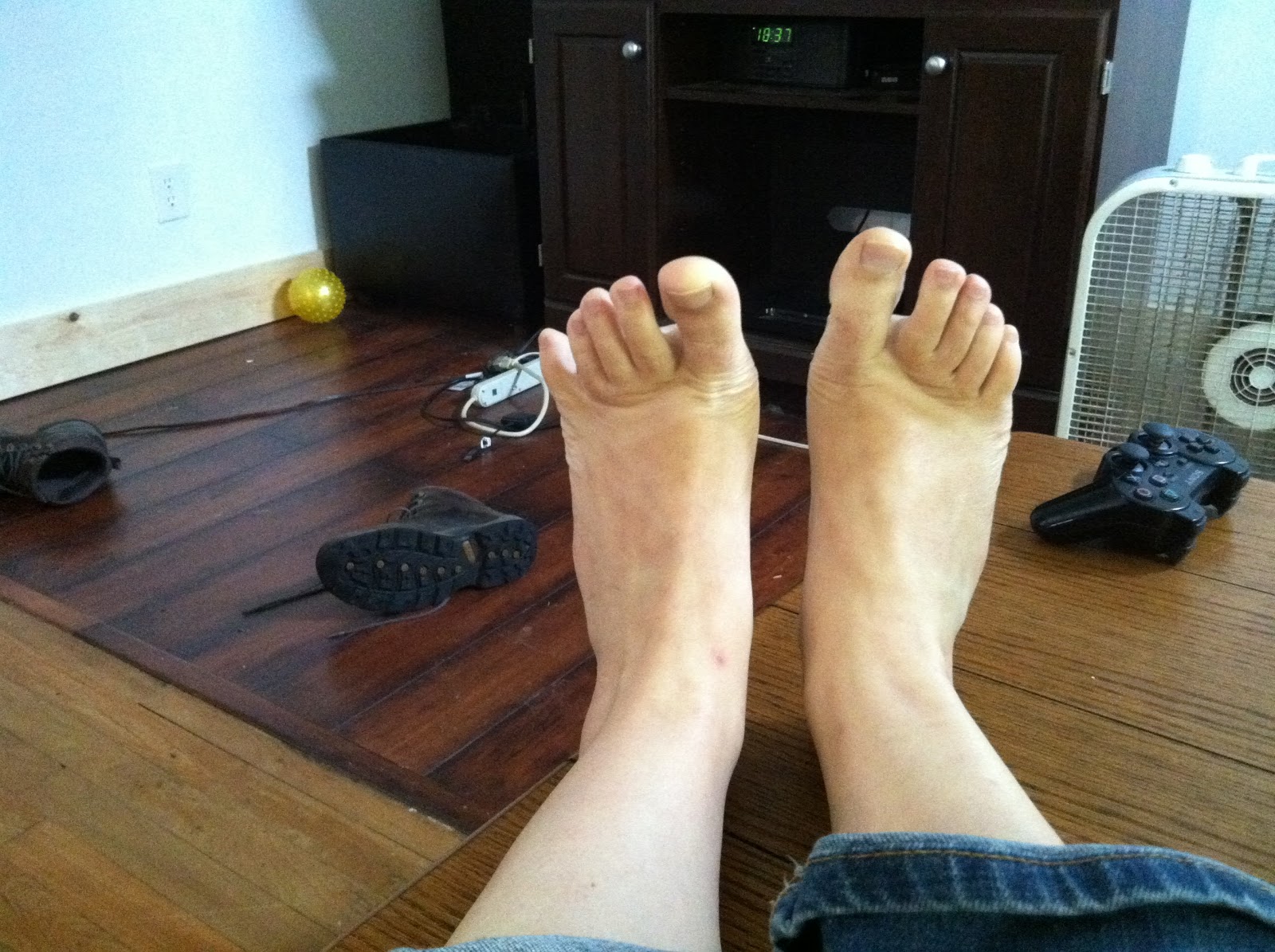
I'm really cherishing the little things right now.  For example, my feet are a perfectly normal size and I can see each metatarsal moving when I flex them.  I'm sure they will swell right up before I even know it.


I remember the day Jeff and I sat together on the couch, four or five days after Vicki was born, telling stories about her birth like we'd seen combat together.  He looked down at my feet propped up on the coffee table and said, "I think I'm seeing parts of your feet I haven't seen in months!"

I'm thinking of Advent, of course, as we church people frantically dive into one of our busiest seasons.  One of the readings for Christmas Day tells Jesus' full birth story (the best one is in Luke).  It tells of all the grand happenings, the census, the traveling, the birth.  And then one little line toward the end:  "But Mary treasured up all these things and pondered them in her heart." 

Did she treasure the feeling of her baby tumbling and kicking inside her?  The birth story of her first child?  There is so much to ponder in your heart in all of this.  I know how she felt.

Thursday, October 18, 2012

growing something big!

Oh friends.  How I have wanted to tell you about this for so long.  And yet . . . having known so many who have suffered the heartache of miscarriage, I held off for the traditional 12-week waiting period to be over.  We have heard a heartbeat.  I know that disaster could still strike (nothing is taken for granted in this journey), but I wanted to wait until the likelihood was lower.   

We are going to have another baby!!!!!!

FAQ's on new baby:

Was it a surprise?
Yes.  Not going to give any more details than that, but we were not anticipating having another child just yet.  Jeff, the eternal optimist, says, "Awesome!  All the kids will be out of the house before we're fifty!"  (We hope.)

How do you feel?
Physically:  Great!  As with Vicki Jo, first trimester seems to present no problems for me.  No nausea, no soreness or tenderness anywhere.  I seem to be one of those women for whom the cocktail of hormones present in pregnancy brings about really good well-being.  The one side effect I experienced last time, fatigue, even seems to have stayed away so far.  Although, I was joking with our midwives that "tired" is a very relative term, and now, with one young child, we operate on kind of a different plane than we did before.  Exhausted may just be my way of life!

Emotionally:  Pretty good.  We have gone through some of the "how will we pay for this - where will this baby's space be in our small home - how will needy and sensitive Vicki Jo adjust to this - how can I take maternity leave from my very busy job - am I ready for the physical rigors of carrying another child" freak-outs.  But I have a great feeling of assurance.  It must be the Holy Spirit.  I know now that I can expand to fill roles that I never knew about before.  I ran into an acquaintance awhile ago who kind of summed it up for me:  "You guys don't do anything halfway, huh?"  Yep.  Leave it to us to get married, graduate from school, find jobs, move 600 miles away, get pregnant, have a baby, get ordained, find other jobs, move 600 miles again, buy a house, put an addition on that house, and get pregnant again.  Within three years.  

Boy or girl?
Not going to find out until birth.

Due date?
April or May.  Not really going down the route of announcing a certain date, even to myself or our family.

Plans for care?
Barring any complications, we are going to have a home birth!  Our hospital experience at Vicki Jo's birth was not bad, but it left both of us feeling that there was nothing about it that we couldn't have done much more comfortably at home.  Also, I love the approach of pregnancy and birth being normal life stages for women, not special events that need medical management.  We interviewed several midwife teams, and the one we picked is superb.  Jennifer, Marilyn and Bobbi have mountains of experience, make us feel totally at ease, and are tuned in to my wavelength of food as medicine and using herbs and natural remedies to try to ease pregnancy complaints.

Tennessee has the benefit of the Farm Midwifery Center, founded by Ina May Gaskin, so there are about a gazillion home birth midwives here.  In fact, there is a separate certification for them - the CPM (Certified Professional Midwife).  It involves rigorous training and hundreds of hours of observation and experience.  I feel totally confident that these women know how to handle a low-risk pregnancy and birth.

Jennifer, Marilyn and Bobbi have just set up a practice in East Nashville, about six blocks from our house!  I walked there with Vicki Jo and the pup the other day.  It's lovely.  I will do all my prenatal visits there, except the one at 36 weeks, which they do in our home.  

Second pregnancy compared to first?
Totally different for me.  If there was one song to define my first pregnancy, it would be U2's "In a Little While," especially the chorus of "slow down my beating heart."  There was a nervous, heart-fluttering, shallow-breath anxiety about my whole first pregnancy, from the time I saw "pregnant' on the stick to holding Vicki Jo against my chest, shivering.  It was something I just couldn't shake, despite all my preparation, meditation, and knowledge that the stress was harmful for both of us.  I just don't feel that this time.  At all.  I feel relaxed and at peace.  I don't need a sonogram to tell me a due date.  I don't need to look at a thousand books and websites to see how big my baby is today.  I just work, play, rest and eat as normal.  I have always been someone who likes to repeat experiences, because I know I will do better at them after the first time.  Pregnancy seems to be no different. 

Also, this time, my job is much less demanding (time-wise) and stressful than my prior appointment.  My diet has improved drastically (I cook almost all of our food, we eat grass-fed meats from local farms, drink raw dairy from a farm in Kentucky, and eat cooked and fresh vegetables from gardens and farms, I don't eat nearly as many grains and empty starches as I used to, I drink and eat a lot of fermented foods, and I'm working on getting fish oil into my diet daily).  I'm roughly following the Brewer diet again (embracing principles without the crazy protein counting), although much of it has just become second nature.  For example, I have eaten two eggs scrambled in butter every morning for the last year, so I haven't had to struggle to fit in the two eggs each day that the Brewer diet recommends.

I am working on walking about an hour each day, usually with Vicki Jo on my back and the pup by my side.  If we can scrape together the money, I will take prenatal yoga each week at the local studio (would be a great Christmas present, family members who are reading!), have monthly acupuncture at our community clinic (only $15 per session!), and have monthly massages.  We are contemplating taking another Bradley class, as well, to refresh our skills and to meet other expectant couples.  Again, not sure if we can cover the cost.

Well, I have given you the exhaustive run-down.  We are so happy.  We were and are a bit stunned, but giddy with the love that is growing inside and between us. 

Between five and six weeks at the in-laws' house.
Between eight and nine weeks at the office.


Coming up on eleven weeks.

Thursday, September 13, 2012

breastfed baby growth chart

Oh, "the chart."  Am I ever familiar with "the chart."

My baby is at the top of the chart!
My little one never made it onto the chart . . . 
My daughter fell off her growth curve and our doctor is concerned.
My newborn wasn't gaining on the chart right and was diagnosed with failure to thrive.

Here's the thing about the chart.  Doctors have all different ones that they use!  Some doctors are using a growth chart from the American Academy of Pediatrics.  Some doctors are using a chart drawn up by using their patients as a sample, so your child is being measured against all the other children in that practice.  The one that they should be using, according to the CDC, is the World Health Organization breastfed baby growth chart (if the child is breastfed, of course!).  I eventually started disregarding the chart the doctor pulled out at our visits, and plotted the weights I took at the breastfeeding clinic onto the WHO chart myself.  I have only recently stopped doing this!  It became somewhat of a ritual for me.

You can find the links to all the charts - boys and girls for weight, height, head circumference, and more - here.  

Another thing about "the chart" is that it functions sort of like a bell curve.  Not everyone in this class can get an A.  For every child that is in the 90th percentile, there must be a child in the 10th percentile.  For every child that is "off the chart," there must also be one that never made it on.  For each parent to think that their child should be near the top of the chart is a logical fallacy.  This is something my doctor never pointed out to me.

Vicki Jo started off right at the 50th percentile:  7 lb, 1 oz at birth.  But here's yet another thing about that weight:  we had both been pumped full of IV fluids for about 24 hours before she was born and weighed.  It certainly bloated me with extra water.  I can only imagine it did the same for her.  By discharge, 24 hours after birth, she was down to 6 lb, 12 oz.  I suspect this is nearer to her actual birth weight.  Turns out my suspicion is probably right.  If we had used her discharge weight instead of her birth weight as the starting point on the chart, no one would have been concerned about her low weight of 6 lb, 6 oz.

Because she lost a lot and was slow to gain it back, though, I was discouraged about the progress we were making with breastfeeding.  And all of this parenting stuff is a confidence game, let me tell you.  I swore to myself that after receiving this blow to my confidence early on, I would tell other new parents I knew about the WHO chart, in case it might help them.  So consider this your PSA!  In fact, I used it just last week, in a rather underhanded way.  Our friends Eric and Mackenzie had a baby in April, and they have been hosting a friendly "guess the baby's weight/height/head circumference" after her regular well-baby visits.  They provide the last check-up's figures, then solicit guesses.  I just took those last figures, plugged them into the chart, and saw where she should be on her curve at this point.  Lo and behold, I was right - down to the ounce! 

Friday, September 23, 2011

on my shelf: spiritual midwifery

This is the third in a series called "On My Shelf."  In this series, I talk about the books I have found indispensable in growing and birthing a little human.  For other book reviews, check out this, this, and these three links.

Today, it's time to get serious and talk about Ina May.

My midwives were very uncomfortable with me keeping up my normal pace as the end of my pregnancy neared.  I wouldn't say I was quite put on bedrest, but I was instructed to stop working and spend as much time as possible laying on my left side.  This helped ease some of the load on my kidneys and keep the fluids circulating around my body a little better.  I didn't really mind (especially because none of my shoes fit anymore and that made it hard to go anywhere!), but I also didn't really heed the advice.  I still worked half-days, and I still left the house pretty much every day.  I hadn't totally made the connection that the stress that permeates my life and profession had crept from my mind down to my body, and was making my womb a less-than-perfect environment for my little one.

One of the places I went frequently was to the library.  Topeka has a fantastic newly-remodeled public library, and I decided I would take advantage of all this free time I had on my hands all of a sudden to read books I'd always been curious about.  Ina May Gaskin's books were on that list.  Ina May is somewhat of a hero in natural childbirth circles.  She's a lay midwife who began her training when she and her husband Stephen traveled around the country in a caravan of buses, seeking an alternative lifestyle "off the grid."  They finally settled in rural south central Tennessee and created The Farm.  When we lived in Nashville and worked at camp, we were very close to The Farm, so I always felt a special kinship when reading about their adventures in that part of the country.

Ina May learned how to deliver babies from delivering babies, and from old obstetrics textbooks.  Over time, she trained many other midwives.  Her rates of intervention, cesarean, and extreme pain in childbirth were remarkably low.  In my opinion, this was due to a number of factors:  the low-stress alternative lifestyle advocated by Farm members; the excellent nutrition and care that pregnant women received; and the lack of fear that surrounds the experience of birth in their culture.  She even invented a special position called the Gaskin Maneuver to help ease a "stuck" baby's shoulder around the pubic bone. 

Her amazing book Spiritual Midwifery is part history, part textbook, and part testimonial. 


She explains how she came to be a midwife, how women who want to learn how to deliver babies should treat their patients, and she allows women to tell their stories.  Reading all of these positive birth stories was the perfect curative for the anxiety and impatience that were wracking my brain as week thirty-seven dragged into week thirty-eight into week thirty-nine.  Plus, you can't help but get a kick out of their special Farm dialect:  everything is "groovy," "far out," "orgasmic." 

Reading this book helped me realize a few things during birth.  Her main emphasis is that the feelings and movements that get the baby in are the same ones that get the baby out.  She encourages physical closeness and touching between father and mother during the birth.  She wants the mother to embrace her own power and strength in bringing new life into the world.  She also claims that all of the different sphincter muscles in the body are connected in a way.  If you keep your mouth loose, your cervix will loosen faster.  I found this to be true in my experience.  As long as I kept my mouth and jaw loose, things progressed well.  (The pitocin didn't hurt either.)

If Dr. Bradley was like my funny old-fashioned but forward-thinking father, Ina May was my braid-wearing, patchouli-scented earth mother.  She told me I was capable of this thing I was about to do, and she kept it real.  Women who complained during birth or who said they were scared were often labeled "chicken s**t."  I loved that kind of grittiness.  It was like, "Yeah, this hurts.  Let's get past that most obvious fact and talk about the beauty and power of it."

Ina May still practices midwifery at The Farm, and my dream is to be able to birth there with her or another one of the midwives someday.  I'm not sure they'll ever take me, since I now have a history of borderline pregnancy-induced hyptertension.  (Part of what keeps their rates of intervention so low is that they really only accept perfectly healthy women to give birth there.  But, to their credit, this protects the safety of women who truly need the hospital to give birth safely.)  But a girl can dream, right? 

Friday, September 16, 2011

on my shelf: husband-coached childbirth

Today I will give the second installment of those books that I've found indispensable in birthing and raising a child thus far.  To see some of my other book reviews, check out this link and these three links.  But today, we're going back to the start.

I first got turned on to the crazy genius of Dr. Bradley way back in my first year of Divinity School.  The wife of a fellow student posted a flier advertising for her Bradley classes, and my interest was piqued.  This was a woman whose prowess in child-bearing and -rearing I really respect, and I knew that she had done it naturally and was embracing a similar kind of lifestyle to what I hoped for our family someday.  So I started poking around on our great big internet, and found out the basic facts.

Dr. Robert Bradley was an obstetrician who practiced in the mid-twentieth century.  He had grown up on a farm and was convinced from watching animal births that birth didn't have to be the painful, frightening experience that our culture insists that it is.  Animals appeared to give birth without pain, after making careful preparations and entering into total relaxation.  So, he started practicing with low-income single mothers and the results were astonishing.  By teaching some very specific techniques and fulfilling six basic needs of the laboring woman, the vast majority of women under his care were able to give birth without any medication or intervention.  So, he passed on his knowledge to a family called the Hathaways, who really became the big Bradley evangelizers.

Jeff and I found a Bradley class in our area that was starting up right at my twentieth week of pregnancy.  The class goes for twelve weeks, two hours per class (although our chatty class frequently stretched into three hours and more!) - making it one of the longest and most comprehensive childbirth preparation classes.  It was the best choice we made in all of our pregnancy.  Our instructor, Amber, was so deeply knowledgeable and passionate about birth and maintaining the health of the pregnant woman.

The book that goes along with the course is called Husband-Coached ChildbirthSay what you will about the title (old-fashioned, not everyone who has a baby has a husband, etc), but the book is fantastic.


The book is charming and kooky.  Dr. Bradley starts to feel like your slightly crazy but brilliant great-uncle.  He has theories on why women shouldn't wear underwear.  He encourages husbands and expectant wives to continue their intimacy with enthusiasm (and detail!).  But when it comes down to it, he reduced his rate of intervention and surgery to what was absolutely required by the biological statistics.  There are situations where a cesarean is absolutely necessary, but only about three percent of the time.  That was his rate.

He outlines nutrition, exercise, all stages of labor and birth, and what you can expect emotionally and physically in the period immediately following birth.  His was the book that I made sure I had on my nightstand as the baby and I were recovering in bed.

And, as I've noted elsewhere, the class really bonded us together.  Jeff and I got closer, he became totally sold on the notion of natural childbirth and became my greatest supporter and coach, and our class has enjoyed some great times together and continues to meet regularly for playgroup and cookouts.  Because of the nature of the class, the moms that I'm now friends with have great insights for me.  And we owe it all to Dr. Bradley!

Seriously, if you're at all interested in returning to some of the biological roots of childbirth, and birthing in relaxation and total knowledge of what is happening, read this book.  Take a class if you can, but if you can't, at least read the book.  There will be parts that have you shaking your head and giggling, but you will walk away with an incredible foundation, and wonder why your doctor didn't tell you this stuff.

Tuesday, July 12, 2011

vicki jo

Well, the time has come.  I have more to say than I can fit into a Facebook status, and I feel like some folks think my commentary and theories on things are worthwhile, so I'm going into blogging.  If you don't want to read it, you don't have to!  That's the beauty of this format.  I have a neat little system set up for topics, but today, we're starting with the single most important thing that has ever happened to me:  I helped a baby enter the world.

Let me tell you how it happened.

Pregnancy had gone swimmingly for me up until the last ten weeks or so.  Seriously - no morning sickness, no nighttime bathroom visits, I even LOST weight in the first trimester (probably because I had to stop drinking beer).  However, around thirty weeks, my blood pressure started creeping up.  I began retaining a lot of fluid.  My feet, hands, wrists and face were very swollen.  Jeff and I had taken a Bradley birth class (best thing ever - please take one if you are even remotely interested in natural pregnancy and childbirth), so I wasn't stupid.  I knew that this was probably spelling pre-eclampsia, which properly terrified me. 

Our midwives, who are amazing people, didn't push me into an induction as some medical professionals might have done.  Instead, they took a "conservative observation" stance and ordered lots of tests to make sure my organs and the baby were all holding up well.  The non-stress and protein tests were all coming back good, and although I was advised to spend as much time as possible laying on my side, I agreed to meet my stepdad and his wife for dinner on Friday, April 1.  I was thirty-nine weeks and one day - six days until they had been telling me this baby would make her appearance.

As I was walking out to my car to drive across town and meet them, I saw two boys riding their bikes down the street.  I squinted into the evening sun and waved to them.  Simultaneously, my right foot missed the final step onto our driveway, and I fell with all my gigantic pregnant weight full onto my belly.  I had my cell phone in one hand and my purse in the other, so my belly truly broke my fall.  The two bike-riding boys sped over to help me, and people poured out of the sketchy house across the street.  Never in my life have I been so grateful for the suspiciously high turnover of people at that house - they all wanted to call an ambulance for me!  I declined and drove myself the five blocks to the hospital, completely terrified, sobbing, covered in dirt and blood from my scratches, and not feeling the baby move.

When I arrived at St. Francis, I looked like a bedraggled tweedle-dee.  I presented myself at Labor and Delivery and told them my story, taking those big heaving ragged sob-breaths.  They hooked me up to a monitor for observation.  Rita, my amazing nurse, calmed me down and told me the baby's heart rate was fantastic.  I slowly began to feel her move again.  They wanted to keep me for two hours, to make sure everything was okay.  I felt like that was unnecessary - I still wanted to go eat dinner, as I was pregnant and starving.  But they kept me.  Finally, I was allowed to get up and go.  But, when I stood up, I felt like I had peed my pants.  I knew that this could not possibly have happened without my noticing.  I told Rita, and she had my lay back down and check on this mystery fluid.

Pretty soon the mystery was solved - it was amniotic fluid, and we needed to get ready for the baby to be here!  I was totally floored.  This was not what I had planned, I had not felt a single contraction, Braxton-Hicks or otherwise, and I knew from my recent visits to the midwives that I was not in a good place for an induction.  My cervix was high and closed, and trying to force the baby out would very likely end in surgery - my personal nightmare.  Because of my high blood pressure, I knew I would be confined to bed, on my left side, for the duration of labor.  Hospital policy was that the baby needed to be out within 24 hours, one way or another, or infection could begin to set in because of my broken waters.  I began to wish I had never drawn attention to my amniotic fluid situation and just been able to go home.  But it was too late.  I called Jeff, who was thrilled to get this baby show on the road.  It was about 6:00 on April 1.

They hooked me up to the many machines that would become my constant companions for the next 20 hours.  IV, which was awful and made me feel like I couldn't bend my right arm; fetal monitor, which was awful and had to be dragged with me on my next 132890 trips to the bathroom; blood pressure cuff, which was awful and automatically squeezed my arm annoyingly hard every two minutes whether I was contracting or not.  In case you can't tell, Jeff and I are planning a homebirth for next time.

Jeff soon arrived, jazzed about his role as my Bradley coach.  We read through our birth plan with our nurses - the first six or seven items were already moot!  Although we knew an induction was likely because I was not in any kind of active labor, we were still totally committed to making it through without any other medications.  My generous midwives gave me until two the next morning to see if labor might kickstart on its own before starting the hellish Pitocin.  I did crosswords, Jeff rested, and I even managed to close my eyes a little bit.  I visualized my body opening and the baby emerging.  I breathed deeply and willed my body to work calmly and effectively.  At two, they checked on me, and I had made some progress on my own!!  I hadn't really felt a contraction still, so I was shocked.  I was allowed to go on by myself, in dark and calm and quiet, until five that morning.  At that point, I had made no further progress, so Pitocin was started in my IV line.

It wasn't so bad at first.  The nurse had been instructed to turn up the level of the drug every 20 minutes until I started pushing, but she had mercy on me in my unmedicated state and let it stay low as long as I was making progress.  The contractions came hard and fast from the start, not at all like what I had heard natural labor was like.  Honestly, what it felt like to me was that I had taken 20 laxative pills and was waiting for the damage to begin.  Jeff coached me beautifully, although the stopwatch soon had to go because the beeping was driving me mad.  We relaxed fully into each contraction.  I continued to picture my body opening and softening. 

We labored this way for about eight hours.  I was making good progress, and then the midwife showed up.  She had the nurse begin to turn the Pitocin up as she had been instructed.  Things started to get a little hairy.  My low vocalizations, which had been extremely effective at helping me through contractions and in communicating with Jeff where I was at, pain-wise, stopped being so effective (or low).  I felt like an animal screeching in pain.  I began to ask about my options for pain relief.  I was offered stadol or an epidural.  We declined the epidural, but I took a shot of stadol into my IV line.  Stadol is a narcotic that lessens your perception of the pain you are feeling.  For me, it didn't relieve the pain, but it allowed me to relax more fully between contractions.  It also made me trip out.  I was picturing all these colors.  I felt like I was at a Pink Floyd laser light show.  I was telling Jeff about the chickens we were raising (they aren't real), and how we needed to feed them.  I was seeing contractions as shapes and colors.  Honestly, it was pretty awesome!  It took my mind off what was happening.  The stadol lasted about an hour, and then it was time to push!  I had insisted that the nurse check me, because something felt different - and I was right! 

Pushing was very difficult for me.  I think it was because the baby remained very high even when my cervix was totally open.  It took about two hours.  The first half-hour or so I didn't really push with my whole force, so I imagine that time was kind of wasted.  Once I got the hang of pushing, things got better.  I had to get to the point where I understood that I needed to push until it felt like my eyes were going to bulge out of my head.  That was what got the job done.  I was supposed to wait for contractions to push, but I just started inventing them so I could get the experience over with.  Also increasing my frustration during second stage was that I felt like the circus had come to town.  For almost all of labor, it had been just me, Jeff and occasionally our nurse.  It had been dark and cool and calm and quiet.  Now, suddenly, there was the midwife and the nurse and the midwife's assistant and probably a few other people all staring at me and there was a bright light pulled down from the ceiling and many people touching and encouraging me.  They all meant well, but I just wanted to be alone.  They also kept telling me I was almost there, when in reality it was another hour before the baby was born!  I felt falsely encouraged.  As you can tell, my perceptions were also in a strange, faraway labor-land.  Finally, her head emerged!  I remember shouting, "What do I do now?"  I didn't want it to go back in and lose the progress!  They told me to push again.  I felt lots of bumpy lumpy slithering, and her body came out!!  She was born.  I was elated.  I felt absolutely exhilarated.  My heart was pumping and my adrenaline was up.  I was sure that I would cry in this moment, but I didn't at all.  I felt very far from tears.  I was enthused, energized, ready to conquer the next challenge.  It was 4:32 pm on Saturday, April 2.  I had only been in active labor for eleven hours!

My memories after that fog up, but I know that Jeff was the one who began to tear up.  He had to go take a walk to release some of his pent-up energy. His mom was outside the room, and she came into visit her first grandchild.  They cut the cord after awhile, and waited several hours to weigh her and clean her.  I began our first attempt at nursing (funny to think about now, as it is something that is absolutely second nature).  Jeff brought me a taco salad - the first thing I had been allowed to eat in over a day.  My stepdad and his wife brought us flowers.  I had to be stitched up because I had a good-sized natural tear.  I just held the baby close, with lots of blankets wrapping us up.  I shook a lot - they told me this was normal as my circulatory system was adjusting to the lack of baby in my body.  Vicki Jo Grammer was 7 pounds and 1 ounce, 18 1/4 inches.  I think she was not ready to be born yet, or she would have been a little bigger.  But, she really didn't have a lot of choice in the matter the way it turned out.

Everyone says that labor and birth won't go the way you plan it, and I knew that was going to be true.  However, this was really, really far from what I had pictured happening.  It makes quite a story, and one that I will be so proud to tell Vicki when she is old enough to ask how she came into the world.  I am convinced that we owe our lack of surgery to the methods and techniques we learned in our Bradley class.  My body cooperated with the Pitocin because I willed it to relax and open.  The low, moaning, droning vocalizations were especially helpful in making it through contractions.  And, I could absolutely not have held it together without Jeff.  After all these years, he is very skilled in talking me down, and he displayed his talent in it for hours on end.  I always knew we were a great team, and this was our single most shining moment of partnership.